WAR ,WEAPONS AND INTERNATIONAL AFFAIRS.

Authors required to post topics in this blog. those interested mail at jawad95@gmail.com

Search This Blog

Showing posts with label UK. Show all posts

Monday, August 10, 2009

US to target 'Afghan drug lords'


SOURCE-BBC
The US has put 50 Afghans suspected to be drug traffickers with Taliban links on a list of people to be "captured or killed", the New York Times reports.Two American generals have told the US Congress that the policy is legal under the military's rules of engagement and international law, the paper says. In a report, yet to be released, it was described as a key strategy to disrupt the flow of drug money to the Taliban. The move is a major shift in America's counter-narcotics drive in Afghanistan.

In interviews with the Senate Foreign Relations Committee, which is due to release the report later this week, two American generals serving in Afghanistan said that major traffickers with proven links to the insurgency have been put on the "joint integrated prioritised target list", the New York Times reported. That means they have been given the same target status as insurgent leaders, and can be captured or killed at any time.

It quoted one of the generals as telling the committee: "We have a list of 367 'kill or capture' targets, including 50 nexus targets who link drugs and the insurgency." The generals were not identified in the Senate report, the paper said.

Poppy destruction

For many years, US policy in Afghanistan had focused on destroying poppy crops. But in March Richard Holbrooke, the US envoy to the region, said that US efforts to eradicate opium poppy crops in Afghanistan have been "wasteful and ineffective".

He said efforts to eradicate poppy cultivation had failed to make an impact on the Taliban insurgents' ability to raise money from the drugs trade. The southern Afghan province of Helmand is the main producer of Afghan opium, which accounts for more than 90% of the global supply.


Reblog this post [with Zemanta]

Saturday, August 8, 2009

UK 'may have 40-year Afghan role'


SOURCE-BBC NEWS
The UK's commitment to Afghanistan could last for up to 40 years, the incoming head of the Army has said.

Gen Sir David Richards, who takes over on 28 August, told the Times that "nation-building" would last decades.

Troops will be required for the medium term only, but the UK will continue to play a role in "development, governance [and] security sector reform," he said.

Shadow defence minister Gerald Howarth said the UK had to be there long-term to achieve its objectives.

Gen Richards commanded 35,000 troops from 37 nations when he was head of Nato's International Security Assistance Force in Afghanistan between May 2006 and February 2007.

He will take over from Gen Sir Richard Dannatt as the UK's chief of the general staff.

'Campaign winnable'

Gen Richards' comments came as it emerged that three servicemen, from the Parachute Regiment, had been killed north of Lashkar Gah, in Helmand province, southern Afghanistan, on Thursday afternoon.

Their deaths - in an attack on a Jackal armoured vehicle which left a colleague critically injured - take to 195 the number of British troops killed in Afghanistan since 2001.

The Army has suffered its heaviest losses of the entire campaign in recent weeks, but its soon-to-be chief said he strongly believed the campaign was "winnable".

"Demanding, certainly, but winnable," he said.

It is not just reconstruction; jobs and simple governance that works are key

Gen Sir David Richards


Profile: Gen Sir David Richards
He added: "The end will be difficult to define; it won't be neat and clear-cut like the end of some old-fashioned inter-state war might have been."

He said it would take "a long time and considerable investment", adding: "We must remember, though, that we are not trying to turn Afghanistan into Switzerland."

Gen Richards said great efforts must be made to expand the Afghan National Army and build up the police force - only then could the UK's military role "decline".

Equipment

"I believe that the UK will be committed to Afghanistan in some manner - development, governance, security sector reform - for the next 30 to 40 years," he said.

"It is not just reconstruction; jobs and simple governance that works are key, and there has to be a strong reconciliation element to the latter."

For the Tories, Mr Howarth said: "It would not be fair to those who have given their lives for this conflict to say, 'actually, we need to find out how we can scuttle out of here as quickly as possible'."

However, he said the general was not suggesting maintaining the current level of operations for the next 40 years.

Gen Dannatt has called for the government to commit more troops and equipment to Afghanistan, but Gen Richards said he would not be presenting a "shopping list" to ministers.

However, he said the Army and the government needed to "continue to respond flexibly and quickly to the evolving requirements of our campaign in Afghanistan".

Labour MP Mike Gapes, chairman of the Commons foreign affairs committee, said there were "serious questions" to be asked about why other Nato countries were "not pulling their weight".

Mr Gapes asked: "Why are only a few countries taking the major burden of this?

"That is the big issue for the international community - not just for the UK."


Reblog this post [with Zemanta]

Thursday, August 6, 2009

Ridgback armour secrecy deprives British troops of Afghanistan vehicles


Secrecy sounding the armour on new vehicles destined for British troops in Afghanistan is preventing them from being flown into the conflict zone.

The cladding on the Ridgbacks has been classified as so secret that only British transport aircraft are allowed to ferry them to the troops in Helmand province.
As a consequence, the much-needed vehicles have been queuing up in Dubai, with long delays before sufficient UK transport aircraft can be found to take them to Afghanistan.


The four-wheeled Ridgback which is a smaller version of the six-wheeled Mastiff armoured vehicle, was bought from the Americans, partly to replace the Snatch Land Rover. Thirty-seven service personnel have been killed in the Land Rovers, which proved to be no match for the increasingly powerful roadside bombs.


During the time it has taken to deliver the Ridgbacks to Helmand, eight soldiers have been killed from explosions in Helmand. Two of them are known to have been travelling in ageing armoured tracked vehicles.

Under normal arrangements, all previous armoured vehicles bought to provide extra protection for the troops in Helmand have been flown by a mixture of British and civilian chartered aircraft. The most heavily used aircraft have been Russian-made Antonov planes — the giants in the air transport business.However, the new American-designed Ridgbacks have been given a secrecy classification of “UK Eyes only” which automatically bars the use of foreign-owned transport aircraft to carry them to Afghanistan.The RAF has been forced to use only the British-owned C17 Globemaster fleet, consisting of six aircraft, which can take two Ridgbacks at a time. But the Ministry of Defence said the C17s were already working at full stretch, taking all heavy supplies to Afghanistan.At any given time only four out of six C17s are operational, and some of the aircraft have had to be used to complete the final withdrawal of kit and stores from Iraq as part of Operation Brockdale – codename for the pull-out from Basra.
Nine Ridgbacks had been waiting for three weeks in Dubai — the normal stopping-off point for trips to Afghanistan — since they arrived there on July 16. An MoD spokesman said five of the 19-tonne vehicles were now in Afghanistan and the remaining four would be there by Friday.
The vehicles have been used by the Army in Afghanistan since June. A total of 157 have been ordered.
July was the bloodiest month for British forces in Afghanistan since the mission began eight years ago, with 22 soldiers killed and more than 50 wounded in action.
The Ridgback is the British version of the American 4×4 Cougar produced by Force Protection Industries Incorporated in South Carolina. The company also makes the Mastiff.
The vehicle can carry 12 troops and can run on flat tyres at 55mph. It is described as a mine-resistant, ambush-protected vehicle. It has a shaped hull and protected cabin made out of composite armour systems. The troops sit on specially armoured seats.
Ridgbacks are armed with a heavy machinegun, a 7.62mm general-purpose machinegun and a grenade-launcher.Fifty more Ridgbacks are expected to arrive at Al-Minhad air base in Dubai in November.Liam Fox, Shadow Defence Secretary, said: “As our troops are being targeted by Taleban roadside bombs, to have these military vehicles parked in the desert doing nothing is a crass betrayal of our Armed Forces’ bravery. If we have trouble moving nine Ridgbacks, how much more trouble are we going to have to move the 50 which will arrive in November?”“This Government needs to ask our allies to help us get these much-needed vehicles into theatre. But because these are classified as ‘UK Eyes only’, so far the Ministry of Defence hasn’t let our coalition partners help us transport the equipment we need to keep our troops safe,” Dr Fox said.He has written to Bob Ainsworth, the Defence Secretary, to ask for clarification on the planned transport of the further Ridgbacks.
Ridgeback
An MoD spokesperson said: “These [the Ridgbacks] vehicles were never destined for use by 19 Light Brigade who do not have enough trained drivers to operate them.
“This is because the vehicles were only delivered to the Army in May, a month after the brigade deployed. They are being shipped in time for the arrival of their successor formation, 11 Light Brigade, which has spent all summer training on the new vehicles,” the MoD said.The spokesperson added: “These are complex pieces of equipment that will operate in an extremely demanding and dangerous environment. We will not put lives at risk by asking soldiers to drive these vehicles without the necessary training.”

Reblog this post [with Zemanta]

Monday, August 3, 2009

A British Deserter Describes The Afghan War as “unlawful”!


A soldier facing court martial over his refusal to serve in Afghanistan is expected to claim in his defence that the war is unlawful.
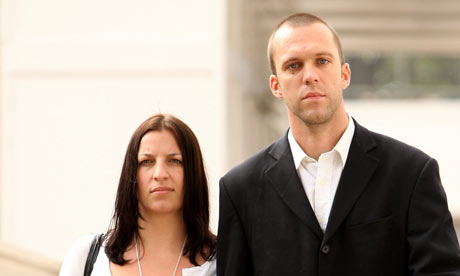
Lance Corporal Joe Glenton, who appeared in court for a preliminary hearing into his case yesterday, maintains that British soldiers are dying in the interest of American foreign policy and should be brought home.


L/Cpl Glenton, 27, of the Royal Logistic Corps, did not enter a formal plea during proceedings in Wiltshire yesterday, where he was charged with desertion. He had been active in a campaign organised by the Stop the War Coalition and delivered a protest letter to Downing Street. The soldier’s counsel, Hugh O’Donoghue, indicated that his client would deny the charge and may call an expert witness to give evidence on the lawfulness of the war.
Prosecutor Gemma Sayer said she would be calling witnesses who were currently serving in Afghanistan and Kuwait and that there may be additional charge connected to the alleged desertion. L/Cpl Glenton is due to return to duties with his regiment at his base in Abingdon, Oxfordshire, where he will be interviewed by the Royal Military police. Having joined the Army in 2004, L/Cpl Glenton, from York, went absent without leave in 2007 before handing himself in after two years and six days. Judge Advocate Alastair McGrigor adjourned the case to 4 September.
Before his court appearance L/Cpl Glenton said: “I always expected to divide opinion and I understood it would happen. I welcome the debate and appreciate some people don’t agree with me. But at the end of the day, what I’m doing is what I feel I have to do and the positive thing is that the whole Afghanistan issue is being discussed – there are places in the world where people don’t get the chance to do this.”
RAF officer Flight Lieutenant Malcolm Kendall-Smith was sentenced to eight months in prison in 2007 and fined £20,000 for refusing to serve in Iraq. A handful of other British service personnel were allowed to leave the service after refusing to serve in Iraq.
From The Independent

Pakistan bigger threat for uk then helmand-report


A House of Commons report published on Sunday concluded that the UK faced more threat from inside Pakistan than from Afghanistan’s Helmand province where, the report asserted, British soldiers were sent on ‘an ill-defined mission undermined by unrealistic planning and lack of manpower’.
The Labour-chaired Commons foreign affairs select committee report raises the alarming spectre of Al Qaeda, ‘which has shifted its focus into Pakistan’.
Professor Shaun Gregory, an expert on Pakistan at Bradford University, told the committee that a direct attack on Pakistan’s nuclear weapons infrastructure could not be ruled out.
According to the Observer, MPs concluded that there was now a ‘strong argument to be made’ that the Afghan insurgency was no longer an immediate threat to Britain, adding: ‘That threat in the form of Al Qaeda and international terrorism can be said more properly to emanate from Pakistan’.
The report concluded that, while the military campaign in Helmand might be gaining traction, Afghan support for the troops had been damaged by civilian casualties and ‘cultural insensitivity’, and there was no evidence the war on drugs had reduced poppy cultivation.
A weak, corrupt police force was driving Afghans back to the Taliban to seek justice, it argued, while cultural assumptions about women were barely changed.
The Observer said Whitehall was braced for the publication this month of a review of the Afghanistan campaign by General Stanley McChrystal, commander of US forces there, which was expected to trigger a fresh debate over troop numbers. Some MPs believed parliament might even be recalled from recess to debate Afghanistan.
The Foreign Office admitted on Saturday night that the insurgent threat in Helmand was ‘greater than anticipated’, but said the aim of denying Al Qaeda a safe haven remained unchanged.
The committee suggested that Whitehall was distracted by Iraq during its planning, made wrong assumptions about Afghan expectations and gave unclear direction to the armed forces. It noted that ‘most analysts believe the initial UK strategy failed primarily because of a lack of manpower and a poor understanding of the local situation’.
Meanwhile, a memo from Major Brian Dupree leaked to the newspaper showed that Britain’s war effort in Afghanistan was being hindered by a number of frontline troops ‘too fat to fight’.
The Ministry of Defence confirmed that it had directed military chiefs to ensure units were following army fitness policy after concerns were raised over a ‘worrying trend of obesity’.

Sunday, August 2, 2009

AL-QAIDA ATTEMPTS TO INFILTRATE MI5

Al-Qaida sympathizers have attempted to infiltrate British security service MI5 during its recent campaign to recruit more agents from diverse backgrounds.
A number of potential infiltrators were weeded out during a six-to-eight months vetting process which followed their application to join the organization, The Guardian newspaper quoted security sources as saying.


A key part of the huge recruitment drive has been to employ more people from ethnic minority backgrounds to bolster the agency's counter-terrorism capability. Around 100,000 candidates have applied for just 400 jobs.

Staff numbers are expected to grow by more than 50 percent during the next two years to 3,500, with more than half devoted to counter-terrorism.

According to the BBC, tens of thousands of people annually apply to join MI5, but only a handful in comparison make it through to final selection. Applicants' backgrounds and sympathies are intensively investigated.

Created in 1909 as the British security intelligence agency, MI5 is responsible for protecting Britain against covertly organized threats to national security, which include terrorism, espionage and the proliferation of weapons of mass destruction.